

Ever forget where you put your keys? Your wallet? That password you just created yesterday? We’re all forgetful people—research even shows there are three types of memory: good, bad, and convenient. But here’s what matters most: we often forget what God has done for us.
That’s why throughout Scripture, God’s people are constantly reminded to remember Him. “Remember well what the Lord your God did,” Deuteronomy tells us. The Psalms echo, “Remember the wonders He has done.” It’s not just ancient history—Ephesians reminds us that we “were once far off” but have now “been brought near by the blood of Christ.”
The Night Everything Changed
In Luke 22, we witness the defining moment of redemption history. Jesus gathers His disciples for what they think is a traditional Passover meal—the same celebration Israel had observed for 1,500 years, commemorating their deliverance from Egyptian slavery. But this night would be different. This night, the Old would become New.
Jesus sends Peter and John with precise instructions to prepare an upper room. Nothing is accidental. While betrayal lurks in the shadows, God remains in complete control. The disciples arrive expecting the familiar, but Jesus is about to fulfill the deepest meaning behind everything they’ve celebrated their entire lives.
From Shadow to Reality
For centuries, Jewish families sacrificed spotless lambs at Passover, marking their doorposts with blood so the angel of death would pass over. It was a powerful reminder of physical deliverance. But Passover was always meant to point forward—like a movie trailer hinting at the full story yet to come.
Jesus wasn’t just observing Passover that night. He was fulfilling it.
“I have earnestly desired to eat this Passover with you before I suffer,” Jesus tells them. Those words reveal the heart of redemption: it begins with God’s desire for relationship with you. Before the cross, before the suffering, Jesus wanted fellowship. You are pursued before you perform.
The Substitute We Needed
Then Jesus takes the bread and says something revolutionary: “This is my body, which is given for you.” He’s declaring that He will suffer in their place, bear what they deserve, become the true Passover Lamb.
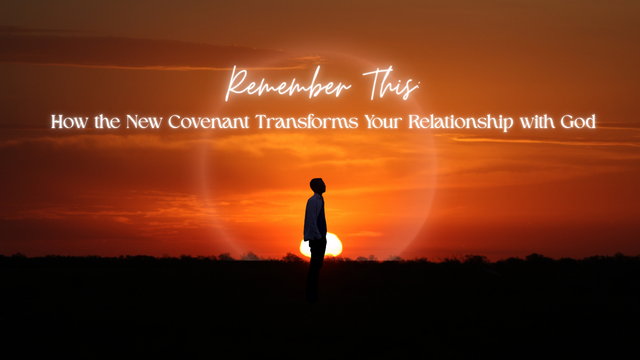
After supper, He takes the cup—specifically the third cup, the Cup of Redemption—and announces: “This cup is the new covenant in my blood.”
Game changer. The Old Covenant depended on human faithfulness, and humanity repeatedly failed. The New Covenant depends entirely on Christ’s obedience. This means:
- Forgiveness is final. No more temporary covering of sin—Christ’s blood removes it permanently.
- Access to God is open. No temple barriers, no priestly intermediaries. Through Jesus, you draw near.
- Transformation comes from within. The Law moves from stone tablets to changed hearts.
What This Means for You Today
Your salvation doesn’t rest on your consistency but on Christ’s completed work. Because of the New Covenant, your past doesn’t define you, your failures don’t cancel you, and your standing with God rests on Jesus—not your performance.
The Old Covenant said, “Try harder. Offer more. Come again.” The New Covenant declares, “It is finished. Come and receive.”
Here’s your action step: This week, when guilt or regret creeps in, remember the New Covenant. Speak this truth aloud: “My hope is built on nothing less than Jesus’ blood and righteousness.” Let communion—whether at church or in your daily remembrance—remind you that redemption is personal, and there’s a place set for sinners made new by grace.
Perhaps today you’re carrying guilt or living in past faults. Turn them over to Jesus. Trust in Him and step onto the Road of Redemption today.
Prayer: Lord Jesus, thank You for the New Covenant sealed in Your blood. Help me remember daily that I am forgiven, accepted, and transformed—not by my efforts, but by Your finished work on the cross. When I forget, remind me. When I doubt, anchor me in Your grace. I receive Your redemption today. Amen.